Over the weekend, US and Israeli forces launched coordinated military strikes against Iran, targeting its nuclear facilities, military infrastructure and senior leadership.
Markets have opened on Monday with a clear but measured risk-off reaction, with equities trading lower, oil sharply higher, and safe-haven assets including gold the Japanese yen and the US dollar in demand. It is understandable that events of this scale have prompted concern. In times like these, maintaining composure is essential.
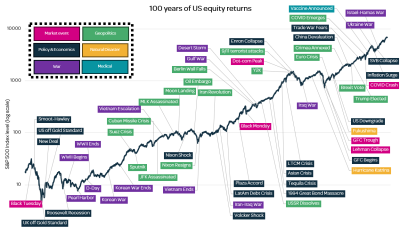
History is instructive when considering events such as these. Major geopolitical events, even those involving military action, have typically produced sharp but short-lived market disruptions.
Source: EQ Investors.
When Israel and the US struck Iranian nuclear facilities in June 2025, oil spiked and then quickly retraced once it became clear that actual supply disruptions would be limited. This pattern repeats across decades of geopolitical (and indeed other market-related) events. The initial reaction will tend to overshoot, and the market then generally recovers as uncertainty resolves. This does not mean complacency is warranted, but it does mean that reactive selling at the point of maximum fear has historically been a costly mistake.
The primary channel through which this conflict could affect the broader economy is energy markets. The Strait of Hormuz, the narrow waterway through which approximately one fifth of global oil and LNG supply flows, is critical to the meeting of global energy demand. Tanker traffic through the Strait has been significantly disrupted and oil prices have risen sharply in response.
This matters because a severe and prolonged energy supply shock (not the conflict itself) could have genuine implications for growth and inflation around the world.
As we regularly mention, in periods like this the value of a well-diversified portfolio becomes visible. Building resilience into our portfolios has been a significant focus for EQ in recent years so when we face market events such as this, portfolios are not caught off guard.
We continue to monitor developments closely, particularly for signs that this event could affect the global economic outlook. However, we remain cautious against making significant portfolio changes. We will keep you informed should that assessment change.
The investors most damaged by geopolitical crises are typically those who sold into the initial shock and failed to reinvest before the recovery. Patience, and a portfolio built to stand uncertainty, remains the most reliable tool available in environments such as these.